
Hirata Family
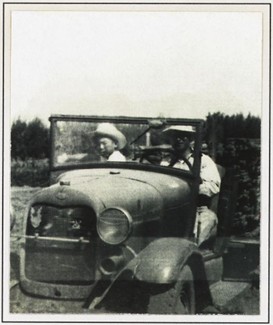
1951年 父のマスと息子のトム(12歳)が、サウス・ブレイニー・アベニューのラーソン農園で作物を運んでいる様子
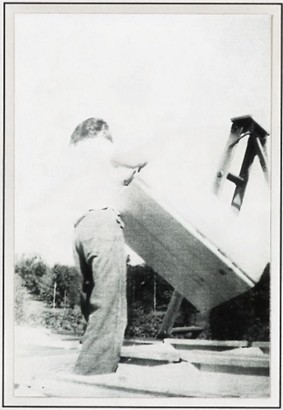
1951年 娘のリンダ(約11歳)が、キュパティーノのラーソン農園で洋梨の収穫中に箱を配っている様子
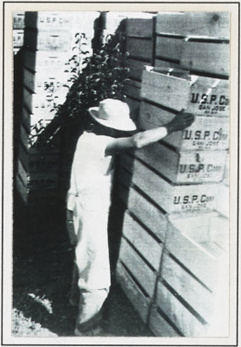
1951年 マスが、キュパティーノのサウス・ブレイニー・アベニューにあるラーソン農園で洋梨の箱を積み重ねている様子
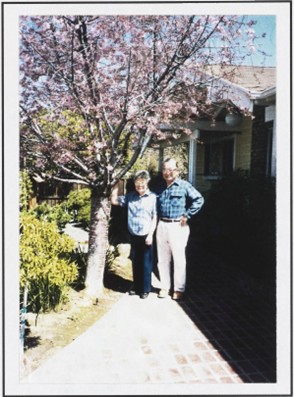
1991年3月 キュパティーノの自宅の庭でにある満開の桜の木の横に立つマスとティー・ヒラタ
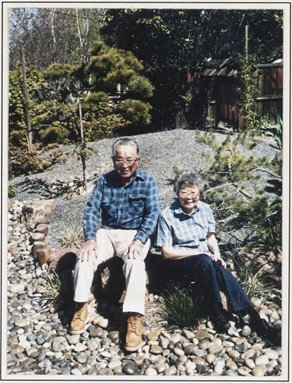
1991年 美しい日本庭園の前庭に立っているマスとティー。この庭園は1990年に彼らの子供たち、トムとリンダから50周年の結婚記念日に贈られたもの
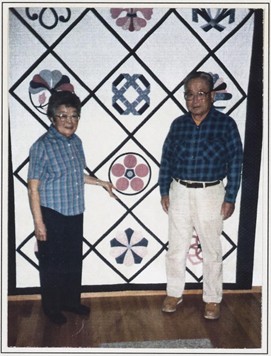
1991年 キュパティーノのサウス・ブレイニー・アベニューにあるリビングルームで、マスとティー・ヒラタ夫妻。ティーが家族の家紋を指している
Did you know…? The name of the city of “Cupertino” hasn’t always been pronounced the same as it often is today. Instead of being pronounced like /ˌkuːpərˈtiːnoʊ/ KOOP-ər-TEEN-oh, it was pronounced as /ˌkjuːpərˈtiːnoʊ/ KYOOP-ər-TEEN-oh, like in “cute” or “cupid”. This older pronunciation is still heard today among the older generations!
カリフォルニア州サンタクララ・バレーのキュパティーノにおける初期の日本人家族
これは「Cupertino Historical Society and Museum」と「Cupertino-Toyokawa Sister Cities Program」の共同制作です。
ご存知でしたか…?
かつて、Cupertinoの都市の名前は、今日一般的に発音されるものとは英語で異なっていまた。現在では、現地での発音は /ˌkuːpərˈtiːnoʊ/ であり「クーパーティーノウ」に近いが、以前の世代では /ˌkjuːpərˈtiːnoʊ/ であり、「キューパーティーノウ」に近いと読みました。
これが、この都市の名前が日本語で「クパチーノ」「クパティーノ」「キュパティーノ」「キュパーティノ」など、様々な表記方法で書かれてきた理由の一部です。
CHSMは、将来の世代のためにCupertinoの歴史を保存するという趣旨から、この展示では、より古い表記である「キュパティーノ」を使用することにいたしました。
The Story of Mas and Tee Hirata
Early Beginnings - Coming to America
Mas's father, Sakuhei Hirata, came to the United States from Kumamoto, Japan with a group of single men around 1890. He stopped in Hawaii for a short time, then went to the northwestern part of the United States. He settled in the state of Washington or Montana, where he worked for the railroad. From the northwest, he then moved to Watsonville, California to work for John Brakovich, an apple grower.
Marriage “A Picture Bride”
In 1916, Sakuhei returned to Japan to meet and look over his future bride. A girl friend of the future bride, who also knew the Hirata family, thought Tomiko Okamoto of Japan would be a good match for Sakuhei in California. She had sent Sakuhei a picture of her friend back in Japan. She was called a "Go-Between" because she made arrangements for the two to meet. When Sakuhei went back to Japan, he approved of Tomiko, and so Tomiko Okamoto, 28, of Japan, and Sakuhei Hirata, 42, of California were married in Japan.
Settling In California
Sakuhei came back to the United States alone to Watsonville and became a sharecropper growing strawberries. He now had his occupation and a place to live, so he sent for Tomiko, who came to the United States in 1917. Shortly after coming to California, Tomiko gave birth to a son on August 7, 1917 that was born two months premature. They called him Mas. Three more sons were born to the couple after Mas. Their names were Jerry, Masao and Masaki, the last of whom died during the influenza plague around 1922 when he was two years old. There were three daughters born to Tomiko and Sakuhei as well, named Helen, Haruko, and June. When Mas's parents were sharecroppers with Mr. Brackovich in Watsonville, Mr. Brackovich had a cow, and the family bought milk from him for ten cents a quart. Mas and his brothers and sisters grew up around strawberries, apples and other row crop fruits and vegetables in the Watsonville and San Juan Bautista area.
When Mas was fourteen, his father died. Three years later, Tomiko, his mother died. He was just seventeen years old. Friends of Mas's parents lived in Alviso on a row crop ranch, and they asked the children to come live with them.
When Mas was eighteen, he got a job driving truck for Produce Transfer in San Jose, that he held for the next five years. His job required him to go to various farms and pick up produce. On one trip to the Nishiyama farm in Coyote to pick up produce, Mas spied the twenty year old daughter of Mrs. Nishiyama. Her name was Tee. He found himself taking trips to the Nishiyama farm even when he had no produce to pick up. Mas and Tee fell in love, and were married in 1940 in the Buddhist Church in San Jose. Mas was twenty-three years old, and Tee was twenty-two. They lived in Alviso, and in July 1941 a son was born to them. They named him Tom.
Tee Hirata, née Nishiyama
Tamoe “Tee” Nishiyama was born on February 28, 1918, in Coyote, California. Her father, Takuzo Nishiyama, was born in Japan and came to America alone in 1909 at age twenty-nine. He settled in Coyote, and was a farm laborer and truck farmer. He died in 1957 at the age of seventy-seven. Tee's mother, Moyo Kaku, was also born in Japan and come to America in 1917 at age twenty-eight. She had been chosen in Japan as a picture bride for Takuzo. They were married in 1917, and Tee was their first born. Subsequently, three more girls and one boy were born. Tee remembered walking three miles to school, and on her way back home in the afternoon, she would buy a loaf of bread for five cents. That was 1924, and she was only six years old then. Moyo died in 1973 at age eighty-four.
A New Life, A New Location
War broke out with Japan in 1941. Mas and Tee were married only one and a half years, with a son one year and one month old, when they were uprooted from their home and lifestyle and sent to Poston, Arizona in July 1942. Their new home was at a bleak, desert internment camp where they were made to live in tar paper barracks and sleep on army cots. They faced many difficult challenges. Their first duty was to fill a large, long bag with straw that became their mattress. The barracks they lived in was eighty-by-twenty feet, partitioned with single walls where four families were forced to live together. They had a community bathroom with latrines and showers. There was absolutely no privacy afforded them. One barracks was used for a mess hall, which had to serve food to about ten barracks. Their first meal at the camp was canned, cold peas, which they had to eat with a knife, as forks and spoons had not arrived at the camp yet.
The desert was terribly hot and averaged around one-hundred-ten degrees in the shade. For three years they lived like this, in the same barracks, under the same unbearable conditions. In December 1942, while at the camp, a baby girl that they named Lynda, was born one month premature. She should have been put into an incubator, but there was none on hand. Later, a hospital was set up and run in the internment camp by Japanese professionals. The camp had one dentist, one or two lawyers, teachers, occupational therapists, and medical doctors. White teachers and professionals were brought in to administer the camp.
Leaving the Camp
Mas and his young family left the internment camp to go to Tooele, Utah, where Mas went to work in an ammunition depot. He signed up for the Utah job because it afforded him a chance to take his family away from that horrible Arizona camp where it seemed like an eternity had passed. Their new home in Utah was federal housing, but there were no guards, and they at last had the privacy they so longed for. Work at the ammunition depot consisted of loading ammunition, 105mm canon shells, land mines and bombs (250 to 500 pounds or 114 to 227kg each) into airplanes. He did this until the end of World War II.
Coming to Cupertino
The family was in Utah for one year, and now it was time to go home. Through a mutual friend, Mas had heard that Roy Larson in Cupertino needed a foreman to run his fruit orchard on Blaney Avenue. Mr. Larson had a home for a new foreman who would be willing to stay. Mas drove from Coyote to talk to Roy, and he was hired on the spot! Mas worked for Mr. Larson for the next twelve years, until Roy was told he could not spray his pear trees anymore due to the housing developments surrounding his land. By now, Mr. Larson had accumulated thirty acres in pears, and twenty acres in prunes. Some of the prune orchard was pulled up and replanted with strawberries. Mas's brother came to raise the strawberries as a sharecropper with Roy Larson. He planted about six of the twenty acres of prunes into strawberries.
After Mr. Larson sold his orchard land in 1958, Mas went to work for the Fremont High School District. Cupertino High School had just been built, and Mas became the field man there, and was in charge of all the new landscaping. All the new schools had outside landscape contractors, but Mas and his helper landscaped the whole school by themselves. Mas stayed at Cupertino High School for eleven years, then went back to the Fremont High School District and became their supervisor of warehouse and field until he retired at the age of sixty-two.
Tee worked at the Richard Woelffel Company as their bookkeeper for twenty-four years. When Blanche Woelffel retired her company in 1973, Tee went to work for Stapleton-Spence Packing Company in the same capacity as bookkeeper. She retired at the end of 1979, but worked part-time for the Howard Dryer Company, and retired completely in 1985.
Mas and Tee’s Children
Tom, their son, started school at Cupertino Grammar School on Stevens Creek Road. He went there from the first grade through eighth grade. Lynda, their daughter, started in the first Cupertino kindergarten class in 1947. Both children started school in the same year. One to kindergarten, and one to the first grade. Lynda went to Collins School, then on to Hyde Junior High, and then both of them went to Fremont High School until they graduated. After high school, Tom went into the navy when he was eighteen years old. His tour of duty lasted four years, and after the service he returned home and enrolled at San Jose State under the G.I. Bill. After graduating, he tried teaching, but didn't like it. From teaching, he went to work for Hewlett-Packard in their research and development department. Tom was still working at Hewlett-Packard in 1991 at the time of the interview as a Software Systems Design Engineer. Tom was married in 1972 to Gloriane Young. They have no children. He lives in the Almaden Valley area.
Lynda went to San Jose State and became a nurse. She worked at a hospital in Los Angeles for two years, then went into the Peace Corp and served in Brazil. After two years, she returned to her home in Cupertino. Lynda met a man named Rick Ellingson in San Diego, and they were married. He was a quadriplegic, but he learned how to paint by holding the brush in his mouth, and he produced many pieces of wonderful art. Lynda took care of this special man, until he died seven years later. It was a full time job taking care of Rick, but he was worth it. Lynda came back to Santa Clara Valley and a nursing job at the Valley Medical Center in San Jose. In 1991, she had her own home in San Jose.
Mas and Tee’s Later Years
When Roy Larson and his wife sold their orchard land, they built a new house out by the road on South Blaney Avenue. The Larsons allowed Mas and Tee to buy a new home right next to theirs in 1959. The Larsons have since passed on, but Mas and Tee were still living at their home on South Blaney Avenue in 1991. Mas and Tee celebrated their Fiftieth Wedding Anniversary in 1990. Their children wanted to send them to Hawaii, but Tee did not care to travel. In place of an island vacation, their children had a landscaper from San Jose landscape a beautiful Japanese garden in the front of their lovely, neat home on South Blaney Avenue. Also, adorning one of their living room walls, is a beautiful, impeccably handmade quilt with their family crest. Several women worked on the quilt for two years, and presented it to them on their Fiftieth Anniversary. It's a real work of art, inspired by a tremendous amount of love for them. Tee passed away after her husband on February 24, 2014, just three days after her 96th birthday
マスとティーのお話
初期の始まり - アメリカへの移住
マスの父であるヒラタ サクヘイは、1890年頃、独身男性のグループとともに熊本県からアメリカへ渡りました。 彼はまずハワイに短期間滞在し、その後アメリカ北西部へ向かいました。 彼はワシントン州またはモンタナ州に定住し、鉄道の仕事に従事しました。 その後、カリフォルニア州ワトソンビルへ移り、リンゴ農園を営むジョン・ブラコビッチのもとで働きました。
結婚 「写真花嫁」
1916年、作平は将来の花嫁に会うために日本に一時帰国しました。 未来の花嫁の友人は、日本のオカモトトミコがカリフォルニアのサクヘイにふさわしいと考えました。 その友人は平田家のことも知っており、日本にいるトミコの写真をサクヘイに送りました。 彼女は二人の出会いを取り持つ「仲人」としての役割を果たしました。 サクヘイが日本に戻るとトミコを気に入りました。 こうして、28歳のオカモト トミコと42歳のヒラタ サクヘイは日本で結婚しました。
カリフォルニアでの定住
サクヘイは単身でアメリカに戻り、再びワトソンビルへ行き、イチゴ農家の小作人として働き始めました。 仕事と住まいを確保した彼は、トミコをアメリカに呼び寄せ、彼女は1917年に渡米しました。 カリフォルニア到着後間もなく、トミコは未熟児の息子を出産しました。 彼は「マス」と名付けられ、1917年8月7日に生まれました。 その後、ジェリー、マサオ、マサキという3人の息子が生まれましたが、マサキは、1922年頃のインフルエンザの流行で2歳の時に亡くなりました。また、ヘレン、ハルコ、ジューンという3人の娘も生まれました。 マスの両親がワトソンビルでブラコビッチ氏のもとで小作人をしていた頃、ブラコビッチ氏は牛を飼っており、家族は彼から1クォート(約950ml)のミルクを10セントで購入していました。
マスと彼の兄弟姉妹は、ワトソンビルやサンフアン、バウティスタ地域でイチゴ、リンゴ、その他の作物に囲まれて育ちました。 マスが14歳のとき、父が亡くなり、その3年後には、母トミコも亡くなりました。彼はまだ17歳でした。 両親の友人は、アルビソに住んでおり、彼らの畑作農園でマスたち兄弟を引き取ってくれました。 18歳になったマスは、サンノゼのプロデュース・トランスファーという会社でトラック運転手として働き始めました。 この仕事は続き、彼は各地の農場へ野菜を引き取りに行く業務を担当しました。 ある日、コヨーテにある西山農場に野菜を引き取りに行く途中、マスはニシヤマ夫人の20歳の娘ティーを見かけました。 彼はティーに惹かれ、野菜を取りに行く用事がない時でも農場へ訪れるようになりました。 やがて二人は恋に落ち、1940年にサンノゼの仏教会で結婚しました。 マスは23歳、ティーは22歳でした。彼らはアルビソに住み、1941年7月に息子のトムが誕生しました。
ティーのお話
ニシヤマ タモエ(ティー)は、1918年2月28日にカリフォルニア州コヨーテで生まれました。 彼女の父、ニシヤマ タクゾウは日本で生まれ、29歳の若さで一人アメリカに移住しています。 彼はコヨーテに定住し、農場労働者として働き続け、1957年に77歳で亡くなりました。 ティーの母、カク モヨウも日本で生まれで、1917年28歳の時にアメリカに来ました。 その時、彼女はタクゾウの写真花嫁として、すでに日本で選ばれていました。 彼らは1917年に結婚し、ティーは彼らの第一子でした。 その後、3人の女の子と1人の男の子が生まれました。 ティーは学校まで3マイル歩き、午後に帰る途中で5セントでパンを1斤買っていました。 それは1924年、彼女がまだ6歳のときでした。モヨウは1973年に84歳で亡くなりました。
新しい生活、新しい場所
1941年、日本との戦争に突入しました。 結婚してわずか1年半、マスとティーには13ヶ月の息子がいながら、一家は強制的に家を立ち退かねばならず、1942年7月にアリゾナ州ポストンの強制収容所へ送られました。 そこは荒涼とした砂漠地帯で、彼らはタール塗料を塗った紙でできた仮設住宅に住み、軍用の簡易ベッドで寝ることを強いられるなど、多くの困難な課題に直面しました。 収容所に着いた彼らの最初の仕事は、干し草を詰めた大きな袋を作り、それをマットレスとして使用することでした。 仮設住宅は20×80フィート(約6×24メートル)の広さで、薄い壁で仕切られ、4家族が共同で暮らしました。 トイレやシャワーは共同で、プライバシーは全くありませんでした。食堂は1つの仮設住宅を使用し、約10棟分の住人の食事をまかなう必要がありました。 彼らが最初に与えられた食事は缶詰の冷たいグリーンピースで、フォークやスプーンがまだ届いていなかったため、ナイフで食べるしかありませんでした。
砂漠地帯で非常に暑く、日陰でさえ気温が110°F(43°C)ほどでした。 彼らはこのように3年間同じ仮設住宅で、常に耐え難い条件の下で生活しました。 1942年12月、収容所でリンダという名の女の子が1ヶ月早産で生まれました。 本来なら保育器に入るべきでしたが、収容所にはありませんでした。 その後、収容所内に日本人専門家によって病院が設立されました。 収容所には、1人の歯科医、1〜2人の弁護士、教師、作業療法士、医師がいました。 さらに白人の教師や専門家が収容所の管理を担当しました。
収容所から離れる
マスと家族は、アリゾナの収容所を出て、ユタ州トューイルの弾薬庫で働句ことを選びました。 ユタでの仕事に応募したのは、まるで永遠に続くかのように感じられた、あの過酷なアリゾナの収容所から家族を救い出すチャンスだったからです。 ユタでの新居は、政府が用意した住居であったものの警備員がおらず、ついに長い間臨んでいたプライバシーを手に入れることができました。 彼の仕事は、105mmの大砲の弾薬、地雷、爆弾(それぞれ250〜500ポンドまたは114〜227kg)を飛行機に積み込む作業でした。 この仕事は第二次世界大戦が終わるまで続きました。 家族はユタに1年間滞在し、ついに故郷に戻る時が来ました。
キュパティーノへ
共通の知人を通じて、マスはキュパティーノのブレイニー・アベニューにある果樹園で管理者を探しているロイ・ラーソンの話を聞きました。 ラーソン氏は、新しい管理者のための住まいも用意しており、長く働ける人を求めていました。 そこでマスはコヨーテから車を走らせ、直接ロイに会いに行きました。 そして、その場で即採用されたのです。その後、マスは12年間ラーソン氏のもとで働きました。 しかし、周囲の宅地開発が進んだことで農薬の使用が制限され、ラーソン氏は梨の木に農薬をまけなくなりました。 その頃には、彼の果樹園は30エーカーの梨畑と20エーカーのプルーン畑にまで広がっていました。 一部のプルーン畑は取り除かれ、新しくイチゴ畑へと作り替えられました。マスの兄もラーソン氏と分益小作契約を結び、イチゴの栽培を始めました。 彼はプルーン畑の20エーカーのうち約6エーカーにイチゴに植えました。 1958年にラーソン氏が果樹園の土地を売却した後、マスはフリーモント高校学区で働くことになりました。 ちょうどその頃キュパティーノ高校が建設されたばかりで、マスはそこで造園管理担当となり、新しい造園作業全般を任されました。 すべての新しい学校には外部の造園業者が手掛けていましたが、マスと彼の助手はクパチーノ学校の造園をすべて自分たちの手で行いました。 マスはキュパティーノ高校に11年間勤務した後、再びフリーモント高校学区に戻り、校内設備の管理監督者となり、62歳で退職するまで務めました。
ティーはリチャード・ウエルフェル社で24年間、経理として勤務しました。 ブランシュ・ウエルフェルが1973年に会社を退職したとき、ティーはスタプルトン・スペンス・パッキング会社に経理担当として移り、その後1979年末に退職しました。 しかし、その後もハワード・ドライヤー社でパートタイム勤務を続け、1985年に完全に退職しました。
マスとティーの子供たち
彼らの息子トムは、スティーブンスクリークロードにあったキュパティーノ・グラマー小学校に入学し、1年生から8年生までを過ごしました。 一方、娘のリンダは1947年にキュパティーノ幼稚園の第一期生として入園しました。 二人は同じ年に入学し、リンダは幼稚園へ、トムは1年生に進みました。 その後、リンダはコリンズ小学校からハイド中学校へ進学し、最終的に二人ともフリーモント高校を卒業しました。 高校卒業後、トムは18歳で海軍に入隊し、4年間の任務を終えて帰郷しました。その後、G.I.ビル制度を利用してサンノゼ州立大学に入学。 卒業後に教師として働き始めましたが、自分には合わないと感じました。そこで転職し、ヒューレット・パッカードの研究開発部門で勤務することになりました。 1991年のインタビュー時点でも、ソフトウェアシステム設計エンジニアとして同社で働いていました。 トムは1972年にグロリアン・ヤングと結婚しましたが、二人の間に子供はいません。 彼らはアルマデン・バレー地区に住んでいます。
リンダはサンノゼ州立大学で看護師の資格を取得し、はロサンゼルスの病院で2年間勤務した後、平和部隊(ピースコープ)に参加し、ブラジルで奉仕活動をしました。 それから2年後、彼女はキュパティーノの自宅に戻りました。 その後、リンダはサンディエゴでリック・エリングソンという男性に出会い、結婚しました。 リックは四肢麻痺を抱えていましたが、口に筆をくわえて絵を描き、多くの素晴らしい作品を生み出しました。 リンダは7年間、彼が他界するまで献身的に介護を続けました。 リックの世話は大変な 仕事でしたが、彼はかけがえのない存在でした。 リンダはその後、サンタクララバレーに戻り、サンノゼのバレー医療センターで看護士として働きました。 1991年の時点では、サンノゼに自宅を構えていました。
マスとティーの晩年
ロイ・ラーソン夫妻は果樹園の土地を売却した後、彼らはサウス・ブレイニー・アベニュー沿いに新居を建てました。 そして1959年、ラーソン夫妻の隣にマスとティーが新しい家を購入することを許可しました。 ラーソン夫妻はすでに他界しましたが、1991年の時点でマスとティーはサウス・ブレイニー・アベニューの自宅で暮らしていました。 1990年、マスとティーは結婚50周年を迎えました。子供たちはハワイ旅行を贈ろうとしましたが、ティーは旅行にあまり興味がありませんでした。 そこで代わりに、サンノゼの造園業者に依頼し、美しい日本庭園を自宅の前庭に造りました。 また、彼らのリビングルームの壁には、家紋があしらわれた見事な手作りのキルトが飾られています。 数人の女性たちが2年の歳月をかけて作り上げ、50周年の記念に贈ったものでした。 それは、マスとティーへの深い愛情が込められた、まさに芸術作品でした。 ティーは、夫の死後、2014年2月24日に96歳の誕生日を迎えた3日後に亡くなりました。